A deep expert guide to pancetta covering origin, flavor, production, cooking, storage, substitutions, and culinary uses, written in a friendly professional tone for food lovers and home cooks.
Pancetta is one of those ingredients that quietly transforms food without demanding attention. It sits at the heart of Italian cooking, lending depth, richness, and a subtle porky sweetness that feels both comforting and refined. While it often gets compared to bacon, pancetta stands on its own as a product with a long tradition, careful craftsmanship, and a flavor profile that rewards anyone willing to understand it.
At its core, pancetta is a cured pork belly that has been seasoned with salt and aromatic spices, then rested to develop complexity. Unlike smoked pork products, pancetta relies on time, technique, and balance rather than smoke to create its signature taste. This makes it incredibly versatile in the kitchen, fitting seamlessly into rustic home dishes and elegant restaurant plates alike.
Origins and Cultural Roots of Pancetta
Pancetta comes from Italy, where curing meat was historically a necessity rather than a luxury. Before refrigeration, curing pork allowed families to preserve food through colder months while also developing bold flavors. Over generations, this practice evolved into an art, with pancetta becoming one of the most beloved results of that tradition.
Different regions of Italy developed their own approaches to pancetta, influenced by climate, available spices, and local taste preferences. Some areas favor a simpler seasoning that highlights the natural sweetness of pork, while others embrace herbs and spices for a more aromatic result. What unites these regional styles is respect for the ingredient and patience in the curing process.
Beyond Italy, pancetta has traveled the world, finding a place in modern kitchens everywhere. Chefs and home cooks alike appreciate how it delivers richness without overpowering other ingredients. Its cultural roots remain strong, yet its appeal is global.
What Pancetta Is Made From
Pancetta is made from pork belly, the same cut used for bacon. This part of the pig is naturally rich in fat, which is essential for flavor and texture. The fat melts gently when cooked, carrying seasoning and enhancing whatever dish it touches.
The pork belly is trimmed and cured with salt as the primary preservative. Additional seasonings often include black pepper, garlic, juniper, bay leaf, or other regional spices. These aromatics infuse the meat over time, creating layers of flavor rather than a single dominant note.
After curing, pancetta may be rolled into a tight cylinder or left flat, depending on tradition and intended use. The shape affects texture and slicing, but both forms deliver the same essential qualities that define pancetta.
Pancetta Versus Bacon
Comparisons between pancetta and bacon are common, but they are not interchangeable. While both come from pork belly, the curing process sets them apart. Bacon is typically smoked, which gives it a bold, smoky flavor that can dominate a dish.
Pancetta, on the other hand, is not smoked. Its flavor is cleaner and more nuanced, allowing it to blend seamlessly with other ingredients. This makes pancetta especially valuable in recipes where balance is key, such as pasta sauces, soups, and vegetable dishes.
Texture also differs slightly. Pancetta tends to be silkier when cooked, with fat that melts smoothly rather than crisping aggressively. This subtlety is why many chefs reach for pancetta when they want depth without distraction.
Types of Pancetta
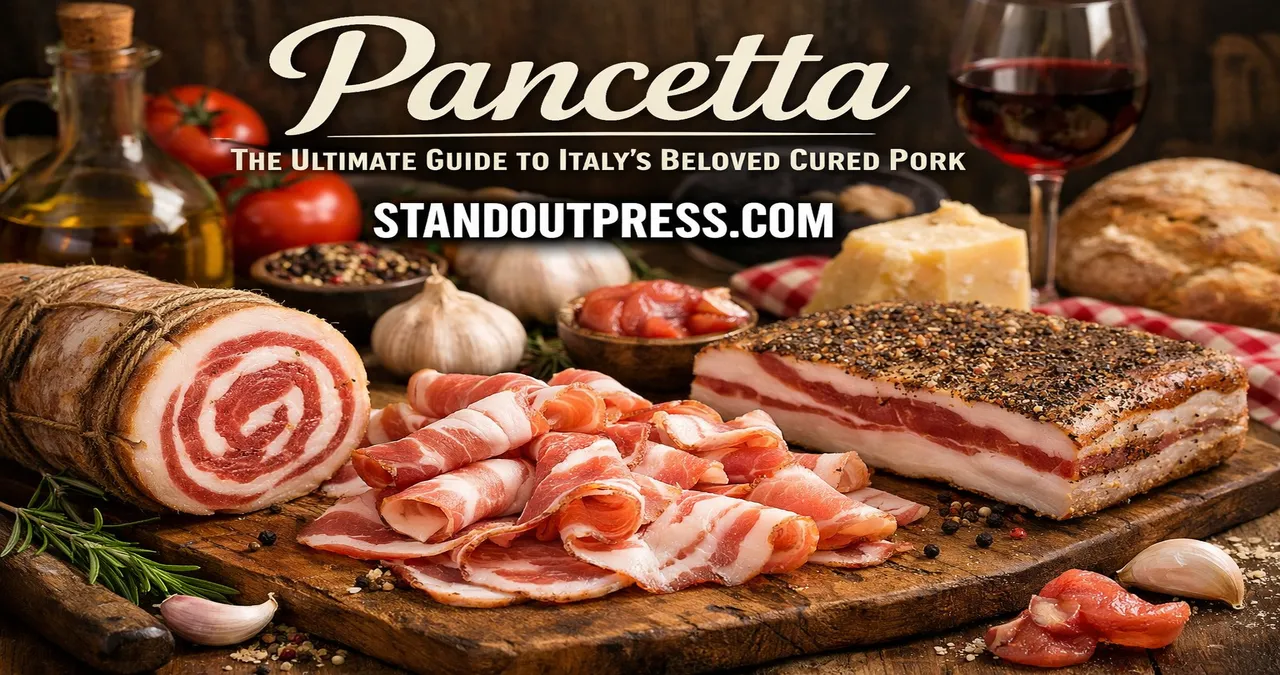
There are several styles of pancetta, each offering a slightly different experience. Flat pancetta is cured and left unrolled, making it ideal for slicing into cubes or strips. Rolled pancetta is tightly wrapped during curing, resulting in a spiral pattern when sliced.
Some varieties are aged longer for a firmer texture and more intense flavor, while others are milder and softer. Spices can vary widely, from simple salt and pepper to complex blends that include herbs and warming spices.
Regardless of style, quality pancetta always reflects careful curing and good pork. The best versions taste rich but clean, with seasoning that supports rather than masks the meat.
How Pancetta Is Produced
Producing pancetta is a slow, deliberate process that rewards patience. After the pork belly is selected and trimmed, it is rubbed generously with salt and seasonings. This mixture draws out moisture while infusing flavor.
The meat is then rested in a controlled environment, allowing the cure to penetrate evenly. Over time, enzymes naturally present in the meat begin to break down proteins, creating tenderness and complexity.
Once curing is complete, pancetta may be air dried to achieve the desired texture. This final stage concentrates flavor and prepares the meat for storage and slicing. Throughout the process, cleanliness, temperature control, and timing are essential to ensure safety and quality.
Flavor Profile and Texture
The flavor of pancetta is rich, savory, and gently sweet, with subtle herbal or peppery notes depending on seasoning. Because it is not smoked, the taste remains focused on pork and spice rather than smoke.
Texture plays a major role in its appeal. When raw, pancetta is firm yet pliable. When cooked, the fat softens and melts, creating a luxurious mouthfeel that coats other ingredients.
This combination of flavor and texture makes pancetta a natural enhancer. It does not shout, but it leaves a lasting impression that elevates the entire dish.
Cooking With Pancetta
Pancetta shines in a wide range of cooking applications. It can be diced and rendered slowly to create a flavorful base for sauces, soups, and stews. The rendered fat becomes a cooking medium that adds depth without heaviness.
In pasta dishes, pancetta is often sautéed until just golden, releasing its aroma before other ingredients are added. This technique ensures that its flavor spreads evenly throughout the dish.
Pancetta can also be wrapped around vegetables or seafood, protecting delicate ingredients while adding richness. Its fat bastes whatever it surrounds, creating a harmonious balance of flavors.
Pancetta in Italian Cuisine
Italian cuisine uses pancetta with restraint and respect. It often appears as a supporting ingredient rather than the star, providing background richness that ties a dish together.
Classic sauces rely on pancetta to build flavor from the very first step. By gently cooking it in a pan, cooks create a foundation that supports tomatoes, herbs, or vegetables without overwhelming them.
Even simple dishes benefit from pancetta’s presence. A humble plate of greens or beans becomes something special when touched by its savory warmth.
Pairing Pancetta With Other Ingredients
Pancetta pairs beautifully with a wide range of ingredients. Vegetables like onions, leafy greens, and squash absorb its flavor and become more satisfying. The saltiness of pancetta balances natural sweetness in produce.
Cheese is another natural partner. Mild cheeses benefit from pancetta’s savory depth, while sharper varieties create contrast that keeps dishes interesting.
Herbs and spices should be used thoughtfully. Pancetta already carries seasoning, so additions should complement rather than compete. Fresh herbs, gentle aromatics, and simple spices work best.
Using Pancetta in Modern Cooking
Modern kitchens have embraced pancetta as a versatile alternative to smoked pork. Its clean flavor allows chefs to experiment across cuisines without introducing unwanted smokiness.
Pancetta appears in fusion dishes, from grain bowls to creative sandwiches. Its ability to adapt while maintaining its identity is part of what makes it so valuable.
Home cooks appreciate pancetta for the same reason. It offers restaurant level flavor with minimal effort, making everyday meals feel special.
Health and Nutrition Considerations
Like all cured meats, pancetta should be enjoyed thoughtfully. It is rich in fat and salt, which contribute to its flavor but also mean moderation is wise.
When used as a seasoning rather than a main component, pancetta adds satisfaction without overwhelming a meal. Small amounts go a long way in delivering flavor.
Choosing high quality pancetta made with care can also make a difference. Better products rely on good pork and balanced curing rather than excessive additives.
Buying Quality Pancetta
Selecting good pancetta starts with appearance. The meat should show a clear balance of lean and fat, with fat that looks creamy rather than dull.
Aroma is another important indicator. Quality pancetta smells clean, savory, and inviting, never sour or overly sharp.
When possible, buy from trusted butchers or specialty shops that understand curing. They can often provide guidance on how a particular pancetta is best used.
Storing Pancetta at Home
Proper storage helps preserve pancetta’s quality. Wrapped well and kept cold, it maintains flavor and texture for an extended period.
Once sliced, pancetta should be protected from air to prevent drying. Rewrapping tightly or storing in a sealed container works well.
If frozen, pancetta should be wrapped carefully to avoid absorbing other flavors. Thawing slowly helps retain its original texture.
Substitutes for Pancetta
While pancetta is unique, there are times when substitutes are needed. Unsweetened cured pork without smoke can provide a similar base, though the flavor will differ.
When using substitutes, consider how the ingredient functions in the dish. If pancetta is there for fat and salt, adjust seasoning accordingly.
No substitute perfectly replicates pancetta, but thoughtful choices can still create satisfying results.
Common Mistakes When Cooking Pancetta
One common mistake is cooking pancetta too quickly over high heat. This can cause the fat to render unevenly and the meat to toughen.
Another issue is oversalting a dish that already includes pancetta. Because it is cured, it contributes significant salt on its own.
Understanding pancetta’s role as a flavor builder helps avoid these pitfalls and leads to more balanced cooking.
Pancetta in Professional Kitchens
Professional chefs value pancetta for its reliability. It delivers consistent flavor and behaves predictably during cooking.
In restaurant settings, pancetta often appears in prep work, where it forms the base of sauces and fillings. Its ability to enhance without dominating makes it a favorite.
Even in high end cuisine, pancetta remains relevant because it connects modern dishes to culinary tradition.
Table of Pancetta Uses and Characteristics
| Cut Style | Flavor Impression | Typical Uses | Notes |
|---|---|---|---|
| Flat pancetta | Clean and savory | Dicing, sautéing | Easy to portion |
| Rolled pancetta | Rich and aromatic | Slicing, wrapping | Attractive presentation |
| Aged pancetta | Deep and intense | Finishing dishes | Stronger presence |
Quotes From Culinary Professionals
“Pancetta is about balance. It gives you richness without taking over the plate.”
“When you use pancetta well, people may not know it is there, but they feel the difference.”
Frequently Asked Questions About Pancetta
What makes pancetta different from other cured meats
Pancetta stands out because it is cured without smoke, allowing the natural pork flavor and seasoning to remain at the forefront. This gives it a cleaner and more versatile taste.
Can pancetta be eaten without cooking
Pancetta is cured and can be eaten as is when properly prepared. Many people prefer it cooked because heat releases aroma and softens the fat.
Is pancetta suitable for everyday cooking
Yes, pancetta works well in everyday meals when used thoughtfully. Small amounts add depth and satisfaction without making dishes heavy.
How should pancetta be sliced for best results
Slicing depends on the recipe. Thin slices work well for wrapping, while cubes are ideal for rendering and building flavor.
Does pancetta need additional seasoning
Often it does not. Pancetta already contains salt and spices, so extra seasoning should be added carefully and gradually.
Conclusion
Pancetta is a timeless ingredient that rewards curiosity and care. Its rich yet balanced flavor, deep cultural roots, and remarkable versatility make it a staple worth understanding. Whether used quietly in the background or showcased with intention, pancetta brings warmth, depth, and authenticity to the table.