
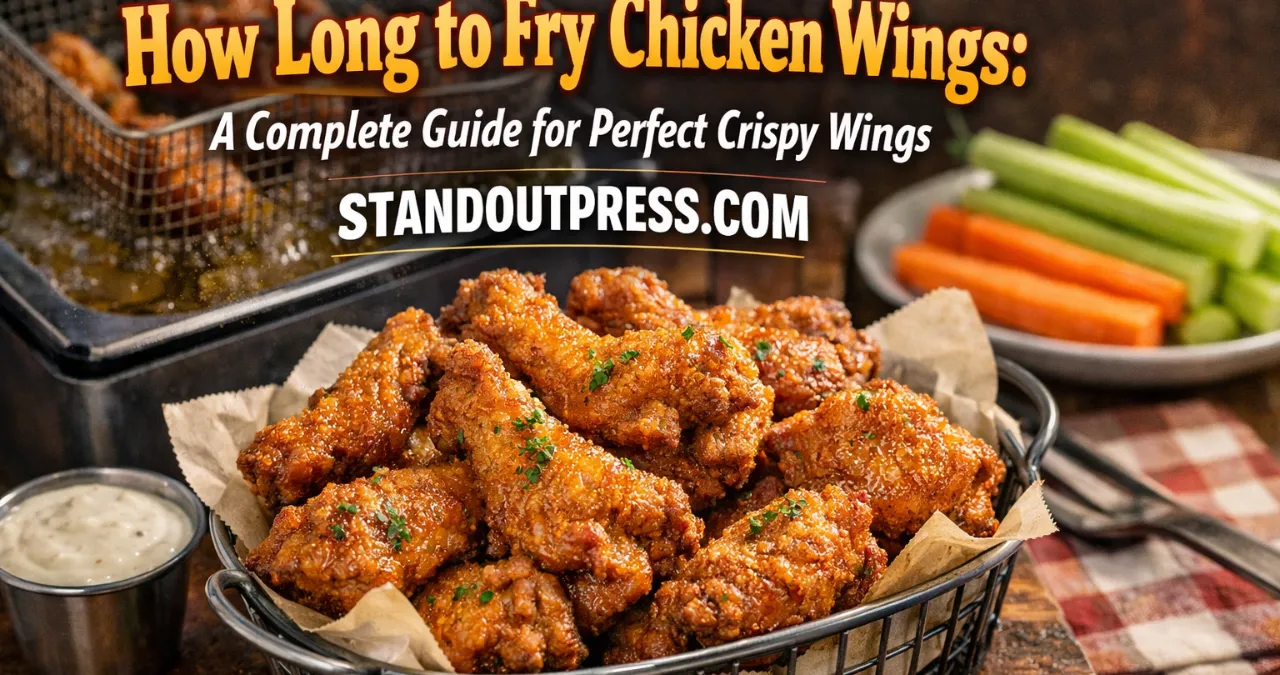
Learn how long to fry chicken wings perfectly every time, with expert tips for crispy, juicy, and flavorful wings at home.
Introduction: Mastering the Art of Frying Chicken Wings
Few things in life are as satisfying as biting into a perfectly fried chicken wing. Golden brown on the outside, tender and juicy on the inside, chicken wings are a favorite snack, appetizer, and party staple. But one question often haunts both beginners and seasoned cooks alike—how long should you fry chicken wings to achieve that perfect balance of crunch and tenderness?
Frying chicken wings might seem simple, but there’s more to it than just dropping them into hot oil. Temperature, wing size, and even the type of coating can dramatically affect cooking time and quality. In this article, we’ll dive into everything you need to know about frying chicken wings, from preparation and frying techniques to seasoning, serving tips, and even troubleshooting common mistakes. By the end, you’ll be confident in creating wings that taste like they came from a top-tier restaurant.
Understanding the Basics: What Affects Frying Time
Before diving into exact timings, it’s crucial to understand the factors that influence how long chicken wings should fry. Not all wings are created equal, and several variables can alter your cooking results.
Size and Thickness of Wings
Chicken wings come in various sizes and cuts. Traditional wings include drumettes and flats, and each piece may cook differently. Larger wings naturally take longer to cook through, while smaller or thinner wings may fry faster. If you try to rush the process, the outside might become overly crispy or burnt while the inside remains undercooked.
Oil Temperature
Oil temperature is the unsung hero of frying. Too hot, and the wings brown too quickly, leaving the inside raw. Too cool, and the wings absorb excess oil, making them greasy and heavy. Maintaining a consistent temperature ensures even cooking and crispy results every time.
Preparing Chicken Wings for Frying
Preparation is half the battle. Properly prepped wings cook faster, taste better, and achieve the ideal texture.
Cleaning and Patting Dry
Start by rinsing wings under cold water and removing any leftover feathers or skin imperfections. Pat them thoroughly with paper towels. Moisture is the enemy of crispiness, and wet wings can cause dangerous oil splatter during frying.
Seasoning and Marination
Flavor is as important as texture. A simple marinade with salt, pepper, garlic, and paprika can elevate your wings. Some experts recommend letting wings rest in the fridge for a few hours to absorb the flavors deeply. If you prefer, a light dusting of flour or cornstarch can add an extra crunch to the final product.
Tip: Do not skip the resting period after seasoning. It allows the seasoning to penetrate the meat and creates a more flavorful bite.
Choosing the Right Oil and Pan
The type of oil you choose can impact frying results. Oils with a high smoke point, like peanut or canola oil, are ideal because they withstand high temperatures without burning.
Deep frying in a heavy-bottomed pan or skillet is preferred over a thin pan, as it provides even heat distribution. Using a thermometer to monitor oil temperature is a game-changer for both safety and consistent results.
Frying Techniques: Shallow vs. Deep Frying
Chicken wings can be fried using two main methods: shallow and deep frying.
Shallow Frying
In shallow frying, wings are partially submerged in oil. This method requires careful flipping to ensure even cooking. It’s less messy than deep frying and uses less oil, but it demands constant attention.
Deep Frying
Deep frying fully immerses wings in oil. This technique is faster, ensures uniform crispiness, and produces wings with that classic golden color. Deep frying can seem intimidating for beginners, but with practice, it becomes straightforward.
Expert Insight: Deep frying at a slightly lower temperature first to cook the inside, followed by a higher temperature for a golden crust, yields restaurant-quality wings every time.
How Long Should You Fry Chicken Wings?
Now we reach the critical question—how long to fry chicken wings. While timing can vary depending on wing size and cooking method, there are general guidelines to follow.
- Start by heating your oil to the optimal temperature.
- Gently lower the wings into the oil using tongs. Avoid overcrowding the pan, as it lowers the oil temperature.
- Cook until the wings are golden brown on the outside and firm to the touch.
Cooking times may differ, but paying attention to visual cues, texture, and internal temperature ensures perfectly cooked wings. The internal temperature should reach a safe level for poultry without overcooking.
Pro Tip: If in doubt, cut into a wing to check doneness. The juices should run clear, and the meat should be fully opaque.
Tips for Extra Crispy Chicken Wings
Crispy wings are a coveted goal for many home cooks. Here’s how to get there:
Double Frying Method
One trick used by professionals is double frying. First, cook the wings at a lower temperature until the meat is almost done. Then, fry them a second time at a higher temperature to achieve maximum crispiness.
Coatings and Batters
Cornstarch, flour, or even a mixture of both can create a crisp crust. Some chefs add baking powder to their coating for an extra crunch factor.
Chef’s Advice: Avoid thick batters, as they can create a doughy texture instead of a crisp finish.
Common Mistakes to Avoid
Even experienced cooks can make errors when frying wings. Here are some pitfalls to watch for:
- Overcrowding the Pan: This drops oil temperature, resulting in greasy wings.
- Skipping Oil Temperature Checks: Hot oil is key for even cooking.
- Ignoring Resting Time: Resting wings before frying ensures better flavor absorption and prevents steaming.
Flavoring and Sauces for Fried Wings
Once wings are fried, the next step is seasoning or saucing. Buffalo sauce, honey garlic, teriyaki, and spicy chili are all popular choices. Toss wings immediately in the sauce while hot for the best coating.
Fun Fact: Tossing wings in sauce while still warm helps the flavors cling better and enhances taste.
Serving Suggestions and Pairings
Fried wings are incredibly versatile. Serve with celery sticks, dipping sauces like ranch or blue cheese, or alongside a crisp salad. They can be a casual snack, a party centerpiece, or even a main course.
Table: Quick Reference for Frying Chicken Wings
| Step | Details | Expert Tip |
|---|---|---|
| Preparation | Clean, dry, and season wings | Let marinate for deeper flavor |
| Oil | High smoke point oil | Monitor temperature with thermometer |
| Frying | Shallow or deep fry | Avoid overcrowding |
| Timing | Cook until golden and firm | Check internal temperature |
| Finishing | Toss in sauce | Coat while hot for best results |
Quotes from Wing Experts
“The secret to perfect wings isn’t just in the frying—it’s in patience and attention to detail.” – Professional Chef
“Crispy on the outside, juicy on the inside, wings are all about texture contrast.” – Food Critic
FAQs About Frying Chicken Wings
Q: Can I fry frozen chicken wings?
A: It’s best to thaw wings completely before frying. Frying frozen wings can cause oil splatters and uneven cooking.
Q: How do I know when wings are fully cooked?
A: Check the internal color and temperature. Meat should be opaque, and juices should run clear. Using a meat thermometer ensures safety.
Q: Is double frying really necessary?
A: While optional, double frying significantly improves crispiness and texture.
Q: Can I bake wings instead of frying?
A: Yes, baking is a healthier alternative. Use high heat and a wire rack to simulate frying for crispiness.
Q: What oils are best for frying wings?
A: Peanut, canola, sunflower, or vegetable oils with high smoke points are ideal.
Conclusion: Achieve Wing Perfection Every Time
Frying chicken wings is both an art and a science. By understanding preparation, oil temperature, timing, and seasoning, anyone can create wings that are crispy, juicy, and flavorful. Experiment with techniques like double frying, various coatings, and sauces to find your perfect combination. With patience and attention, your wings will rival those from the best restaurants, every single time.