
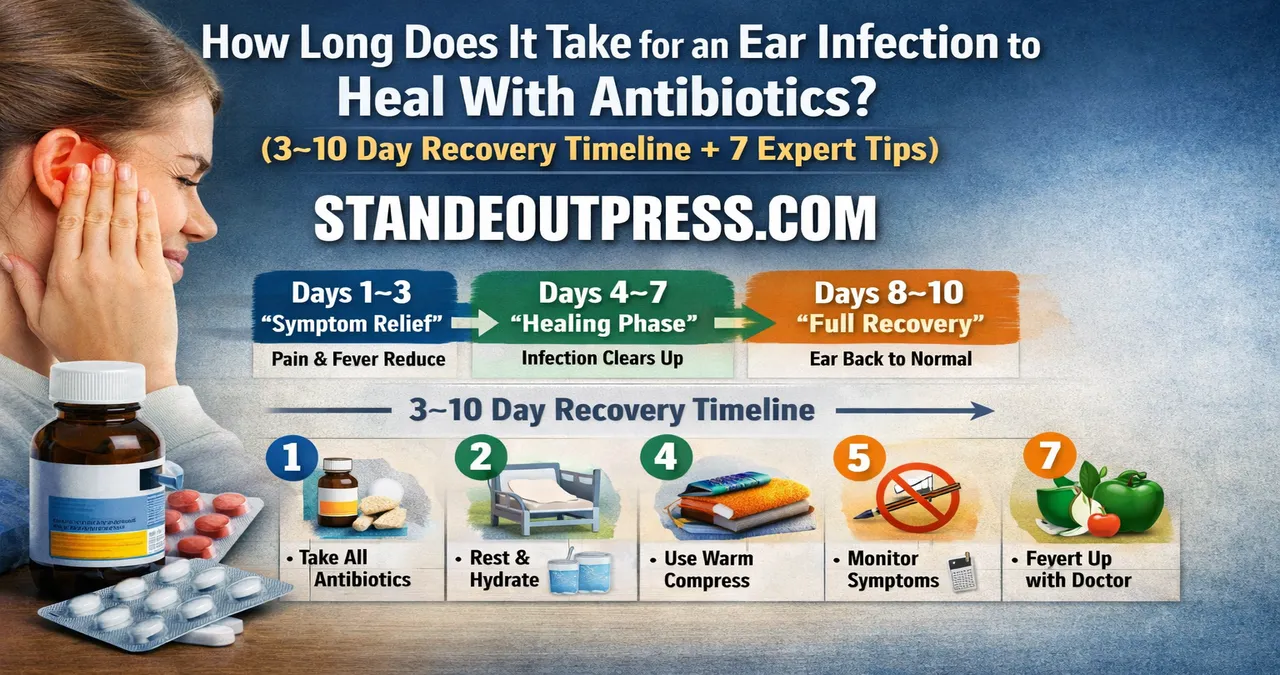
How long does it take for an ear infection to heal with antibiotics? Learn the 3–10 day recovery timeline, symptom relief stages, and expert tips for faster healing.
Ear infections are a common health issue that can strike anyone, from children to adults. They can be painful, annoying, and sometimes even disrupt sleep and daily activities. One of the most common ways to treat bacterial ear infections is through antibiotics. But many people often ask, “How long does it take for an ear infection to heal with antibiotics?” The answer isn’t the same for everyone because several factors influence the healing process.
Antibiotics can be highly effective in fighting the bacteria causing the infection, but the timeline for improvement depends on the type of infection, its severity, the patient’s overall health, and how promptly the treatment starts. Understanding these factors can help patients manage expectations and prevent complications.
Understanding Ear Infections: How Long Does It Take for an Ear Infection to Heal with Antibiotics
An ear infection occurs when bacteria or viruses cause inflammation in the ear. There are three main types of ear infections: outer ear infections (otitis externa), middle ear infections (otitis media), and inner ear infections (labyrinthitis). Each type can cause varying levels of pain, discharge, and temporary hearing issues.
The middle ear infection is the most common, especially in children. Symptoms may include ear pain, fever, fluid drainage, and sometimes difficulty hearing. While some ear infections resolve on their own, antibiotics are prescribed when the infection is bacterial and severe enough to warrant treatment.
The Role of Antibiotics
Antibiotics are specifically used to target bacterial ear infections. They work by either killing bacteria or preventing their growth, allowing the body’s immune system to fight off the remaining infection. However, antibiotics are ineffective against viral infections, which is why accurate diagnosis is crucial.
Doctors typically recommend completing the full course of antibiotics, even if symptoms improve early. Stopping treatment prematurely can result in incomplete healing and may contribute to antibiotic resistance.
Factors That Influence Recovery Time
The time it takes for an ear infection to heal with antibiotics can vary depending on multiple factors. Understanding these factors can help patients know what to expect and avoid unnecessary anxiety.
Severity of the Infection
Mild infections often respond quickly to antibiotics, with noticeable relief within a couple of days. More severe infections, however, can take longer to heal. Pain, swelling, and fluid buildup may persist even after the bacteria have started to clear.
Patient’s Age and Health
Children often recover faster from ear infections than adults because their immune systems can respond more quickly. On the other hand, individuals with chronic health issues, weakened immune systems, or previous ear problems may experience prolonged recovery.
Timing of Treatment
Early intervention can significantly shorten recovery time. If antibiotics are started soon after symptoms appear, the infection is less likely to worsen or lead to complications. Delayed treatment can extend healing and sometimes require additional medical attention.
Typical Healing Timeline
While recovery times vary, most bacterial ear infections respond to antibiotics within a few days. Patients often notice improvement in pain, fever, and discomfort within the first forty-eight to seventy-two hours of starting medication.
However, complete healing of the ear lining and fluid resolution may take longer, sometimes up to two weeks. Follow-up appointments are recommended, especially for children, to ensure the infection has fully cleared and that no complications, such as fluid buildup or hearing issues, remain.
Recovery in Children
Children may start feeling better faster, but middle ear fluid can linger, affecting hearing and balance. Pediatricians may recommend monitoring the child’s progress closely, even after symptoms improve.
Recovery in Adults
Adults may experience slower recovery depending on the severity of the infection and other health conditions. Pain relief may be noticeable within a few days, but full recovery could take a week or more.
Tips for Faster Recovery
While antibiotics are the main treatment for bacterial ear infections, several supportive measures can help speed up recovery and reduce discomfort.
Pain Management
Over-the-counter pain relievers, such as acetaminophen or ibuprofen, can help manage discomfort while the antibiotics take effect. Always follow the recommended dosages and consult a doctor if needed.
Ear Care
Keeping the ear dry and avoiding inserting objects into the ear canal can prevent further irritation. Warm compresses can also alleviate pain temporarily.
Hydration and Rest
Adequate hydration supports the immune system, while rest helps the body fight infection more efficiently.
Monitoring Symptoms
Keeping track of symptoms helps determine if the antibiotics are working. If pain worsens or new symptoms appear, consult a healthcare professional promptly.
Complications from Delayed or Inadequate Treatment
Ignoring an ear infection or not completing the antibiotic course can lead to serious complications. Some of these include:
- Chronic ear infections
- Hearing loss
- Spread of infection to surrounding tissues
- Persistent fluid in the middle ear
A prompt and complete treatment approach significantly reduces these risks.
Comparing Antibiotics and Other Treatments
While antibiotics are effective against bacterial infections, some ear infections may resolve without medication. Doctors sometimes recommend a “watchful waiting” approach, especially for mild infections or viral causes.
| Treatment Type | Effectiveness | Recovery Notes |
|---|---|---|
| Antibiotics | High for bacterial | Relief in a few days, full healing may take longer |
| Pain Relievers | Symptomatic relief | Helps with comfort, does not treat infection |
| Ear Drops | Moderate | Useful for outer ear infections |
| Watchful Waiting | Limited | Effective for mild viral infections |
Expert Advice
“Timely diagnosis and appropriate antibiotic use are key to preventing complications and ensuring quick recovery from ear infections.” – ENT Specialist
Healthcare professionals emphasize the importance of following medical advice and not self-medicating with leftover antibiotics or incomplete courses. Proper care not only speeds recovery but also protects long-term ear health.
FAQs
Q: Can an ear infection heal without antibiotics?
A: Mild ear infections, especially viral ones, may improve on their own within a few days. However, bacterial infections often require antibiotics for complete healing.
Q: When should I see a doctor for an ear infection?
A: If symptoms are severe, persistent, or accompanied by high fever, dizziness, or hearing loss, it’s crucial to seek medical attention promptly.
Q: Can antibiotics cause side effects while treating ear infections?
A: Yes. Common side effects include nausea, diarrhea, or mild allergic reactions. Severe reactions are rare but require immediate medical care.
Q: Why do some people experience lingering fluid after an ear infection?
A: Fluid in the middle ear may remain even after bacteria are cleared, especially in children. It typically resolves on its own but should be monitored.
Q: How can I prevent future ear infections?
A: Preventive measures include keeping ears dry, avoiding smoking exposure, practicing good hygiene, and managing allergies or sinus issues.
Conclusion
Ear infections can be painful and disruptive, but with timely antibiotics and proper care, most bacterial infections heal effectively within days. Recovery time depends on infection severity, patient age, overall health, and adherence to treatment. Following medical advice, using supportive measures, and monitoring symptoms are essential for full recovery and preventing complications.
How Long Does It Take for an Ear Infection to Heal With Antibiotics