
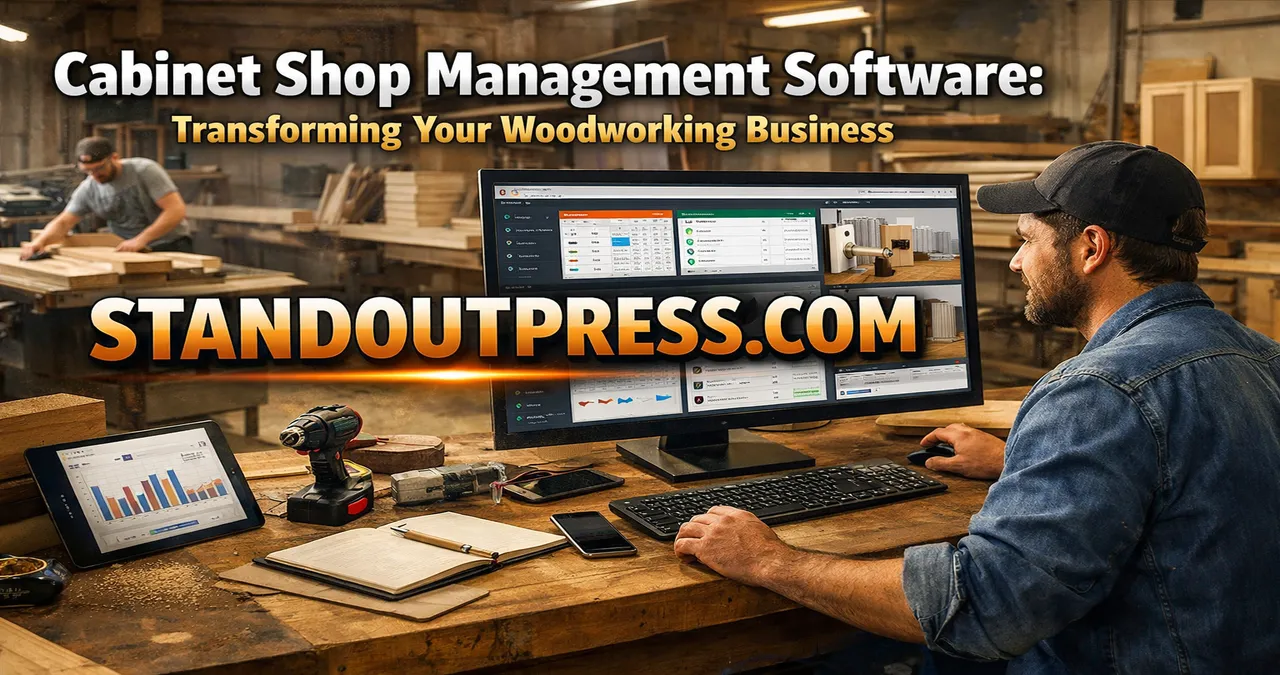
Streamline your woodworking business with cabinet shop management software. Manage inventory, track orders, and boost efficiency effortlessly with expert-level insights.
Running a cabinet shop comes with countless moving parts. From inventory management to order tracking, employee scheduling, and client communications, the daily operations can quickly become overwhelming. That’s where cabinet shop management software comes into play. Designed specifically for woodworking businesses, this software helps streamline every aspect of your operations, allowing you to focus on crafting beautiful cabinets while technology handles the administrative burdens.
Unlike general management tools, cabinet shop software is built for precision and flexibility. It integrates inventory tracking, job scheduling, design planning, and customer management into a single, easy-to-use platform. This transformation can improve productivity, reduce mistakes, and ultimately increase profits. For shop owners, understanding how this software works and what it offers is the first step toward optimizing their business.
The modern cabinet shop cannot rely on traditional spreadsheets or manual record-keeping. These methods are prone to errors, time-consuming, and difficult to scale as your business grows. By adopting specialized software, shop owners can track materials in real time, forecast demand, and improve communication between teams. Whether your business focuses on custom cabinetry, commercial projects, or residential installations, cabinet shop management software provides the tools needed to stay competitive in a fast-paced industry.
What is Cabinet Shop Management Software?
At its core, cabinet shop management software is a digital solution designed to help woodworking businesses handle operations more efficiently. Unlike generic business management tools, this software focuses on the unique needs of cabinet shops, such as precise inventory tracking, order scheduling, and labor allocation.
One of the main benefits is its ability to centralize all aspects of shop management. From quotes to production schedules, inventory management, and delivery logistics, everything can be controlled from a single dashboard. This centralized approach reduces the risk of mistakes, saves time, and provides actionable insights for better decision-making.
Additionally, modern software often includes features like automated cost estimation, material tracking, and customer relationship management. This allows shop owners to focus more on creativity and craftsmanship rather than administrative hassles. By providing real-time data, it ensures every project is delivered on time and within budget, which is crucial for maintaining client satisfaction and trust.
Key Features of Cabinet Shop Management Software
Cabinet shop management software offers a range of features designed to streamline every aspect of your business. Understanding these key functionalities can help shop owners make informed decisions when choosing a software solution.
Inventory Management:
One of the most critical aspects of a cabinet shop is managing materials. This software allows you to track wood, hardware, and finishes in real time, reducing the risk of shortages and overstock. Automated alerts can notify you when supplies run low, ensuring uninterrupted production.
Order and Project Tracking:
From initial customer inquiry to final delivery, every project can be monitored. This includes deadlines, labor hours, material usage, and project progress. By keeping everything in one place, you can quickly identify bottlenecks and improve efficiency.
Scheduling and Labor Management:
Managing a team can be complex. Software tools allow you to assign tasks, schedule shifts, and monitor productivity. This ensures that every team member is working on the right project at the right time, reducing downtime and maximizing output.
Cost Estimation and Budgeting:
Accurate cost estimation is vital for profitability. Cabinet shop software can calculate material, labor, and overhead costs automatically, providing accurate quotes to customers and ensuring projects stay within budget.
Customer Relationship Management (CRM):
Keeping track of client communications, quotes, and project history can be challenging without proper tools. CRM features help maintain relationships, follow up on leads, and provide personalized service, boosting client satisfaction and loyalty.
Integration with Design Software:
Many cabinet shops use CAD or 3D design tools. Modern management software often integrates with these design tools, allowing for seamless transition from concept to production. This integration reduces errors and streamlines workflow.
Benefits of Using Cabinet Shop Management Software
The benefits of adopting specialized software for your cabinet shop extend beyond simple convenience. These tools can significantly impact your operational efficiency, profitability, and customer satisfaction.
Enhanced Productivity:
By automating repetitive tasks such as inventory tracking, scheduling, and cost estimation, your team can focus on what they do best—crafting cabinets. This leads to faster project completion and improved overall efficiency.
Better Financial Management:
Accurate cost tracking and budgeting features prevent projects from exceeding budgets. Real-time financial insights allow you to make informed business decisions and identify profitable opportunities.
Improved Communication:
Centralized software ensures that everyone—from the shop floor to sales and management—is on the same page. This reduces errors, miscommunications, and project delays.
Scalability:
As your business grows, managing multiple projects and employees manually becomes increasingly challenging. Cabinet shop management software scales with your business, making it easier to handle more clients and complex projects without sacrificing quality.
Customer Satisfaction:
With accurate scheduling, better communication, and precise cost estimates, clients receive projects on time and within budget. Happy clients often lead to repeat business and referrals, which are essential for long-term growth.
Competitive Advantage:
Many woodworking businesses still rely on manual methods. By adopting modern management software, you position your shop as a professional, reliable, and technologically savvy business, giving you a competitive edge in the market.
How Cabinet Shop Management Software Improves Workflow
Workflow optimization is one of the most significant advantages of this software. Traditional processes often involve multiple spreadsheets, manual measurements, and repeated communication between team members, which can lead to mistakes and delays. Software automates many of these steps.
Streamlined Project Management:
Each project can be divided into tasks, assigned to team members, and tracked for progress. This clear structure helps avoid confusion and ensures that everyone knows their responsibilities.
Real-Time Inventory Updates:
Inventory shortages can delay projects, but software provides real-time stock information. This allows you to reorder materials before they run out, keeping production on schedule.
Integrated Communication:
Built-in communication tools let teams collaborate without relying on emails or phone calls. Notes, updates, and instructions are visible to all relevant personnel, reducing errors and improving efficiency.
Data-Driven Insights:
Software tracks every aspect of your shop’s operations. By analyzing this data, you can identify trends, spot inefficiencies, and make informed decisions to optimize workflow. For example, you might notice a particular type of cabinet takes longer to produce and adjust your scheduling accordingly.
Automation of Repetitive Tasks:
Routine tasks such as generating invoices, updating inventory, or sending reminders to clients can be automated. This frees up your time to focus on more strategic tasks or creative work.
Choosing the Right Cabinet Shop Management Software
With so many options available, selecting the right software for your shop can feel overwhelming. However, focusing on your shop’s specific needs can make the decision easier.
Assess Your Needs:
Start by identifying the most pressing challenges in your shop. Is it inventory management, scheduling, or customer communication? Understanding your priorities helps narrow down software options.
Consider Integration:
If you already use design tools or accounting software, choose a solution that integrates seamlessly. This avoids the need for duplicate data entry and ensures a smoother workflow.
Ease of Use:
A software solution is only effective if your team can use it easily. Look for intuitive interfaces, helpful tutorials, and responsive customer support.
Scalability:
Select software that can grow with your business. It should handle multiple projects, users, and locations as your shop expands.
Cost vs. Value:
While cost is a factor, focus on the value provided. Investing in a robust management solution can pay off through increased efficiency, reduced errors, and higher client satisfaction.
Trial Options:
Many providers offer free trials or demos. Use these to test the software in real-world scenarios and ensure it meets your shop’s requirements before committing.
Cabinet Shop Management Software vs. Traditional Methods
Traditional management methods, like spreadsheets, pen-and-paper scheduling, and manual inventory checks, may work for small shops initially. However, as your business grows, these methods become inefficient and prone to errors.
Efficiency:
Manual methods require repetitive work, while software automates tasks, saving time and reducing mistakes.
Accuracy:
Human error is inevitable with manual tracking. Software ensures calculations, schedules, and inventory counts are accurate.
Data Accessibility:
Traditional methods make it difficult to access information quickly. Software allows instant access to project status, inventory levels, and client information from anywhere.
Collaboration:
Software provides a centralized platform for communication, whereas traditional methods often require multiple phone calls, emails, or in-person meetings to share updates.
Scalability:
Manual systems are limited. As orders increase, spreadsheets and paper records become cumbersome. Software grows with your business, handling complex operations efficiently.
Popular Features Comparison Table
| Feature | Manual Methods | Cabinet Shop Software |
|---|---|---|
| Inventory Tracking | Manual checks, prone to errors | Real-time updates, automated alerts |
| Project Scheduling | Paper or spreadsheets | Visual dashboards, automated reminders |
| Cost Estimation | Manual calculation | Accurate automatic calculations |
| CRM | Phone/email tracking | Centralized client management |
| Workflow Management | Separate tools | Integrated task assignments and progress tracking |
| Data Analysis | Time-consuming | Automated reports and analytics |
Quote: “Adopting cabinet shop management software is like giving your shop a digital brain—everything works smarter, faster, and more accurately.”
Frequently Asked Questions (FAQs)
Q: What types of businesses benefit from cabinet shop management software?
A: Any woodworking business, including custom cabinetry shops, furniture makers, and commercial woodshops, can benefit from improved efficiency and organization.
Q: Is the software difficult to learn?
A: Most modern software is designed to be user-friendly with tutorials and support. Teams usually adapt quickly within a few days of use.
Q: Can I integrate design tools with the software?
A: Yes. Many cabinet shop software solutions integrate with CAD and 3D design programs, ensuring a seamless workflow from design to production.
Q: Will it reduce errors in my shop?
A: Absolutely. By automating calculations, inventory tracking, and scheduling, the software minimizes human error, improving accuracy and client satisfaction.
Q: Is it expensive to implement?
A: Costs vary, but investing in the right software often pays for itself through time savings, improved efficiency, and better project management.
Q: Can it help with remote management?
A: Yes. Cloud-based solutions allow shop owners and managers to monitor operations from anywhere, providing flexibility and control over multiple projects.
Conclusion
Investing in cabinet shop management software is a transformative decision for any woodworking business. By streamlining inventory, scheduling, project management, and client communication, it allows shop owners to focus on what truly matters—the craft. The right software not only improves efficiency but also reduces errors, enhances customer satisfaction, and positions your business for growth. In a competitive industry, adopting modern management tools is no longer optional; it’s a necessity.