Streamline workforce management with biometric time clock software. Secure, accurate, and easy-to-use solutions for tracking attendance, reducing payroll errors, and improving productivity.
In today’s fast-paced business environment, managing employee time and attendance accurately is crucial. Traditional methods like paper timesheets or punch cards are no longer efficient, often leading to errors and time theft. Biometric time clock software offers a modern solution by combining technology and convenience, ensuring businesses track employee hours accurately and securely.
Biometric systems use unique physical characteristics—such as fingerprints, facial recognition, or iris scans—to identify employees. This eliminates buddy punching, reduces administrative burdens, and integrates seamlessly with payroll systems. Organizations, whether small businesses or large enterprises, are increasingly adopting these systems to enhance operational efficiency.
Understanding Biometric Time Clock Software
Biometric time clock software is more than just a digital punch clock. It’s a sophisticated platform that manages employee attendance, schedules, and reporting through secure biometric identification. Unlike traditional systems, it uses individual traits, making it nearly impossible to falsify records.
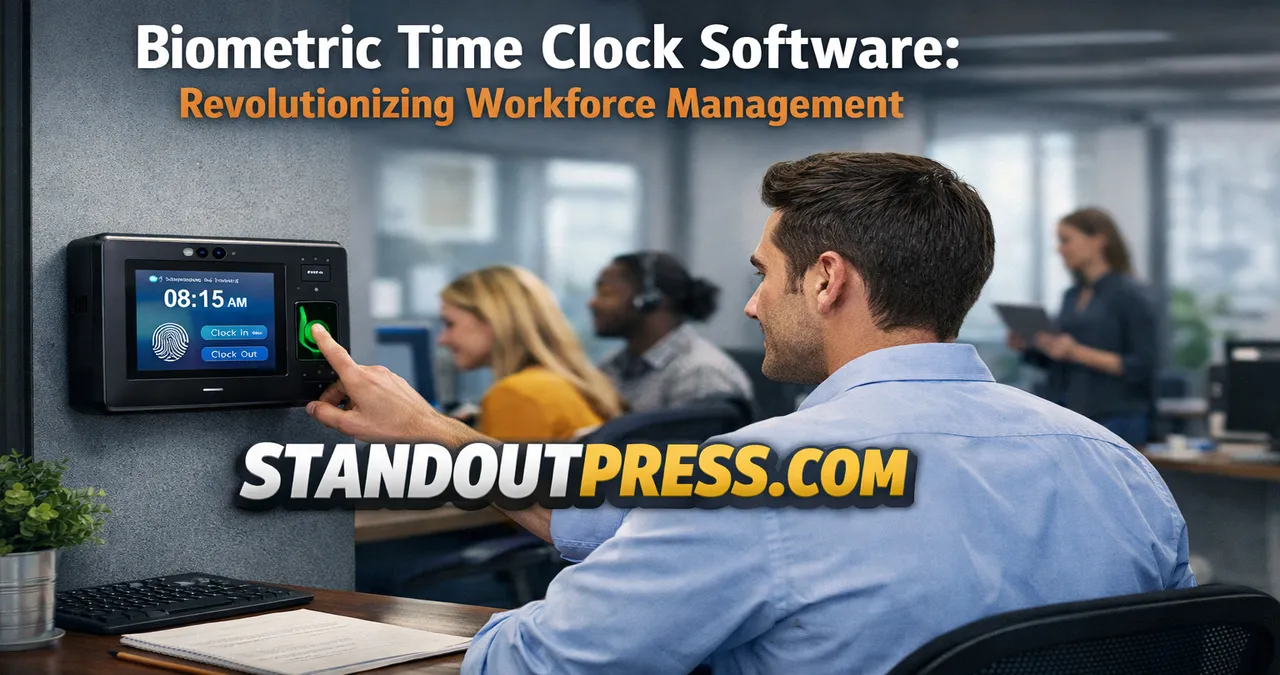
Employees simply scan their fingerprint, face, or even hand to log in or out. The software then records the timestamp automatically. For managers, this provides real-time access to attendance data, enabling smarter decisions about workforce allocation and productivity.
One major advantage is the reduction in payroll errors. Manual tracking often leads to miscalculations and disputes, which can affect employee satisfaction. Biometric time clock software ensures every second worked is accurately recorded and reflected in payroll, streamlining HR operations significantly.
How Biometric Systems Work
Biometric systems work by capturing unique physiological traits and converting them into digital data. This data is stored securely in the software and used to verify identity whenever an employee clocks in or out. The process typically involves three steps:
- Enrollment: The employee’s biometric data is scanned and stored in the system.
- Authentication: Each time the employee logs in, their biometric data is compared to the stored information.
- Recording: The system logs the attendance data automatically and updates reports in real time.
Advanced biometric systems use encryption to protect sensitive data, ensuring compliance with privacy regulations. Moreover, they can be integrated with mobile applications, allowing remote or field employees to log hours accurately from anywhere.
“Biometric systems not only ensure accuracy but also build trust within the workforce by eliminating errors and discrepancies.”
Key Benefits of Biometric Time Clock Software
Businesses adopting biometric time clock software enjoy several advantages. Let’s explore the most notable ones:
Accuracy and Reliability
Manual time tracking is prone to errors, whether from human mistakes or intentional manipulation. Biometric systems remove these uncertainties, recording exact timestamps for each employee.
This reliability translates into precise payroll processing, reducing disputes and improving overall employee satisfaction. Additionally, the software can generate detailed reports for managers, highlighting attendance patterns and potential productivity issues.
Enhanced Security
Because biometric data is unique to each individual, the risk of time fraud is significantly reduced. Employees cannot clock in for someone else, and access to sensitive areas can be controlled efficiently.
For businesses dealing with confidential information, such as financial firms or healthcare providers, biometric verification ensures that only authorized personnel gain entry, enhancing security and compliance.
Streamlined HR and Payroll Processes
Integrating biometric systems with payroll software saves countless hours. Instead of manually compiling timesheets, the software automatically calculates work hours, overtime, and leaves.
This automation reduces administrative work, allowing HR professionals to focus on strategic tasks rather than repetitive calculations. It also ensures that employees are compensated fairly and on time, which boosts morale and productivity.
Types of Biometric Systems
Biometric time clock software can use various methods to authenticate employees. Choosing the right system depends on the nature of your business, employee preferences, and security needs.
Fingerprint Recognition
Fingerprint scanning is the most common biometric method. It’s fast, reliable, and cost-effective. Employees simply place their finger on a scanner, and the system instantly verifies their identity.
However, fingerprint scanners may face challenges with dirty or worn fingerprints. Despite this, advancements in technology have made modern scanners highly accurate and durable.
Facial Recognition
Facial recognition technology identifies employees using facial features. It is contactless, making it hygienic and ideal for environments with high traffic or shared equipment.
The system captures and analyzes key facial points to ensure accurate authentication. Facial recognition is also compatible with mobile apps, allowing remote logging and flexible workforce management.
Iris and Retina Scanning
Iris and retina scans are among the most secure biometric methods. They rely on patterns in the eye, which are nearly impossible to replicate.
While highly accurate, these systems are usually more expensive and are best suited for organizations requiring maximum security, such as laboratories, data centers, or government facilities.
Voice Recognition
Voice recognition software authenticates employees by analyzing speech patterns. It can be integrated into phone-based clock-ins or mobile apps.
This method is convenient for remote teams or businesses that rely heavily on call centers. It ensures employees can log hours accurately without the need for physical devices.
Features to Look for in Biometric Time Clock Software
Selecting the right software requires careful consideration of features that match your business needs. Key features include:
- Real-time Attendance Tracking: Instant visibility into who is clocked in or out.
- Employee Scheduling: Efficiently manage shifts and reduce scheduling conflicts.
- Overtime Management: Automatically calculate overtime hours based on predefined rules.
- Leave and Absence Tracking: Monitor vacations, sick days, and unplanned absences.
- Payroll Integration: Seamlessly sync attendance data with payroll systems.
- Mobile Access: Allow employees to clock in remotely using mobile devices.
A good biometric system should not just record attendance but actively help optimize workforce management and improve operational efficiency.
Implementation Best Practices
Implementing biometric time clock software successfully requires more than just installation. Here are some best practices:
- Employee Training: Educate employees about how the system works and its benefits. This helps reduce resistance and ensures smooth adoption.
- Data Privacy Compliance: Ensure the system complies with local privacy laws and secures sensitive biometric data.
- System Integration: Integrate the software with existing HR and payroll platforms to maximize efficiency.
- Regular Updates: Keep the software updated to leverage new features and maintain security.
Common Challenges and How to Overcome Them
While biometric systems offer many benefits, businesses may face challenges:
Privacy Concerns
Employees may be wary of biometric data collection. Clear communication about data security and privacy policies helps alleviate concerns.
Technical Glitches
Scanners or software may occasionally fail. Having backup authentication methods and technical support ensures uninterrupted operations.
Cost Considerations
High-end biometric systems can be expensive. Choosing the system that balances cost and functionality according to business size is crucial.
Case Studies of Successful Implementation
Several businesses have successfully integrated biometric time clock software to streamline operations:
- Retail Chains: Large stores reduced payroll errors and improved shift management, resulting in better employee satisfaction.
- Manufacturing Firms: Automated attendance tracking helped identify productivity bottlenecks and optimize workforce allocation.
- Healthcare Providers: Contactless biometric systems ensured hygienic clock-ins while securing sensitive areas.
Comparing Biometric Systems with Traditional Time Clocks
| Feature | Traditional Time Clocks | Biometric Time Clock Software |
|---|---|---|
| Accuracy | Moderate | High |
| Fraud Prevention | Low | Very High |
| Payroll Integration | Manual | Automatic |
| Ease of Use | Moderate | High |
| Security | Low | High |
The comparison clearly highlights why modern businesses are shifting toward biometric systems to enhance efficiency and accuracy.
FAQs About Biometric Time Clock Software
What is biometric time clock software?
It is a system that tracks employee attendance using unique biological traits like fingerprints, faces, or iris patterns.
How does it prevent buddy punching?
Since each biometric trait is unique, employees cannot clock in for someone else, ensuring accurate attendance.
Can it integrate with payroll software?
Yes, most modern systems automatically sync attendance data with payroll platforms, streamlining salary calculations.
Is it secure?
Yes, biometric data is encrypted and stored securely, often complying with local data privacy regulations.
Can remote employees use it?
Many systems offer mobile apps with facial recognition or fingerprint scanning, allowing employees to clock in from anywhere.
What if an employee’s fingerprint is unreadable?
Most systems provide alternative authentication methods, such as facial recognition or PIN codes.
Is it expensive to install?
Costs vary depending on the technology used. Fingerprint systems are generally affordable, while iris or retina scans are higher-end solutions.
Conclusion
Biometric time clock software is transforming workforce management by providing accurate, secure, and efficient attendance tracking. From small businesses to large enterprises, it reduces payroll errors, prevents fraud, and simplifies HR processes. By adopting this technology, organizations can not only save time and money but also foster a more transparent and productive work environment.
Investing in the right system, training employees, and ensuring compliance with privacy regulations are key steps to harness its full potential. The future of attendance management is digital, and biometric systems are leading the way.