
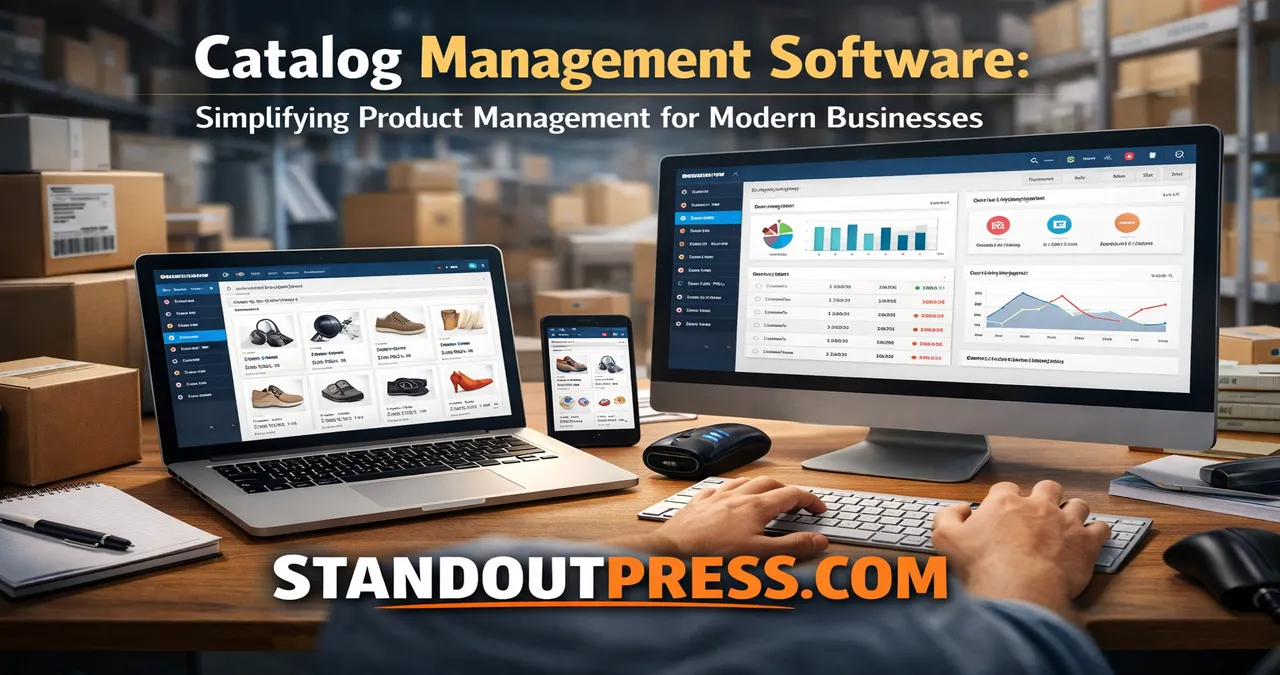
Discover how catalog management software streamlines product organization, improves efficiency, and boosts sales. Learn features, benefits, and expert tips for seamless catalog management.
Introduction to Catalog Management Software
In today’s fast-paced business environment, managing a growing product inventory can become overwhelming. That’s where catalog management software comes into play. It is designed to centralize and simplify the process of maintaining product information, pricing, and digital assets. Businesses, whether small or large, benefit immensely from such software, as it ensures consistency across multiple platforms and reduces manual errors.
Catalog management software isn’t just a tool for storing product information. It acts as a bridge between departments, helping marketing, sales, and logistics teams collaborate more effectively. By keeping all product-related data in one place, businesses can save time, reduce operational costs, and deliver a better customer experience. This software ensures that every piece of information—from product descriptions to high-resolution images—is accurate and up to date.
What is Catalog Management Software?
At its core, catalog management software is a digital system that helps businesses organize and manage all product-related information in a centralized repository. This can include product names, descriptions, pricing, inventory levels, images, and other digital assets. By consolidating all this data, businesses can ensure that every channel—online stores, marketplaces, and physical outlets—presents consistent and accurate information.
Unlike traditional spreadsheets or manual catalogs, this software offers automation, collaboration, and real-time updates. For instance, if a product price changes or an item goes out of stock, these updates can instantly reflect across all sales channels. This not only minimizes errors but also enhances customer trust, as buyers always receive correct information.
Key Features of Catalog Management Software
Centralized Product Repository
One of the most critical features is a centralized product database. Instead of juggling multiple files or systems, businesses can maintain all product information in one place. This ensures that teams always access the latest and most accurate data, reducing the risk of miscommunication or mistakes.
Automation and Bulk Updates
Many catalog management platforms allow for bulk updates and automated workflows. This is especially useful for businesses with extensive inventories, as updating hundreds or thousands of products manually can be a nightmare. Automation ensures efficiency and frees teams to focus on strategic tasks rather than repetitive administrative work.
Multi-Channel Support
Modern businesses sell products across various platforms, from e-commerce websites to marketplaces. Catalog management software supports multi-channel synchronization, ensuring that any update in the product catalog reflects across all sales channels. This keeps information consistent and helps prevent discrepancies that could impact sales or customer trust.
Advanced Search and Filtering
Advanced search functionality allows users to quickly locate specific products based on different criteria such as category, price, or SKU. This saves time and improves productivity, especially in large organizations with thousands of items.
Digital Asset Management
Images, videos, manuals, and other digital assets are essential for showcasing products effectively. Catalog management software often includes digital asset management capabilities, allowing businesses to store, organize, and retrieve these assets effortlessly.
Benefits of Catalog Management Software
Enhanced Efficiency and Accuracy
Manual product management can be error-prone, particularly for businesses with large inventories. Catalog management software automates many processes, ensuring that data is accurate and consistent. This reduces costly mistakes and improves operational efficiency.
Better Customer Experience
Accurate and consistent product information directly impacts customer satisfaction. Shoppers are more likely to trust a brand that provides detailed, error-free product descriptions and images. This software ensures that customers always have the right information, improving trust and loyalty.
Time and Cost Savings
By streamlining product data management, businesses can save significant time and reduce operational costs. Employees no longer need to spend hours updating multiple spreadsheets or correcting mistakes. This efficiency translates into higher productivity and a better bottom line.
Improved Collaboration Across Teams
With a centralized system, marketing, sales, and logistics teams can collaborate more effectively. Updates made in the system are visible to all relevant departments, reducing miscommunication and improving coordination.
Scalability
As businesses grow, managing an expanding product inventory becomes more complex. Catalog management software scales effortlessly, accommodating thousands or even millions of products without compromising performance.
Types of Catalog Management Software
Standalone Catalog Management Systems
These platforms focus solely on managing product information. They are ideal for businesses that need a dedicated system for catalog management without additional e-commerce or inventory features.
Integrated E-commerce Platforms
Some e-commerce platforms include catalog management features as part of their suite. These systems allow businesses to manage product information while simultaneously running online stores. Integration ensures seamless updates between the catalog and sales channels.
Cloud-Based Solutions
Cloud-based catalog management software is increasingly popular due to its accessibility, flexibility, and scalability. Teams can access the system from anywhere, making it ideal for businesses with remote employees or multiple locations.
On-Premise Solutions
On-premise software is installed locally on a business’s servers. While it offers more control and customization options, it may require significant IT support and infrastructure.
How Catalog Management Software Works
Catalog management software works by consolidating all product-related information into a single database. This data can then be structured and categorized to match the organization’s needs. Users can add, edit, or remove product entries, manage digital assets, and automate workflows.
Once set up, the software synchronizes the catalog across all channels. For example, if a new product is added or a price is updated, these changes reflect instantly across e-commerce sites, marketplaces, and mobile apps. Many systems also include analytics and reporting features, allowing businesses to track product performance and optimize their catalogs for better sales outcomes.
Choosing the Right Catalog Management Software
When selecting a catalog management system, businesses should consider several factors:
Ease of Use
A user-friendly interface ensures that employees can quickly adopt the system without extensive training.
Integration Capabilities
The software should seamlessly integrate with existing ERP, CRM, or e-commerce platforms.
Scalability
Choose a solution that can grow with your business and handle expanding inventories.
Security and Compliance
Ensure that the platform provides robust security measures to protect sensitive product information.
Customization Options
Every business has unique needs, so the software should allow customization of fields, templates, and workflows.
Common Challenges and Solutions
Data Duplication
Duplicate entries can cause confusion and errors. Catalog management software solves this by providing a centralized system with validation checks.
Inconsistent Product Information
Different teams may use separate files or formats, leading to inconsistencies. A single-source-of-truth approach ensures accuracy across all channels.
Scalability Issues
As inventory grows, manual processes become unsustainable. Choosing scalable software prevents bottlenecks and supports growth.
Integration Challenges
Some systems may struggle to integrate with legacy tools. Prioritize software with robust APIs and integration support.
Table: Features vs. Benefits of Catalog Management Software
| Feature | Benefit |
|---|---|
| Centralized Product Repository | Reduces errors and ensures consistency across channels |
| Automation & Bulk Updates | Saves time and boosts efficiency |
| Multi-Channel Support | Ensures product information is always up to date |
| Digital Asset Management | Easy access to images, videos, and manuals |
| Advanced Search & Filtering | Quick product retrieval and improved productivity |
| Analytics & Reporting | Tracks product performance and sales trends |
Expert Tips for Using Catalog Management Software
Regular Data Audits
Even with automation, it’s important to periodically review the catalog to ensure accuracy and remove outdated products.
Use High-Quality Digital Assets
Invest in professional images and videos. Good visuals enhance customer experience and boost conversion rates.
Leverage Automation Fully
Explore all automation features, including bulk uploads, automatic updates, and workflow triggers. This maximizes efficiency.
Collaborate Across Teams
Encourage marketing, sales, and inventory teams to use the software collaboratively. This reduces errors and improves alignment.
Monitor Analytics
Use analytics features to identify top-performing products, spot trends, and make data-driven decisions.
FAQs About Catalog Management Software
What is catalog management software used for?
It helps businesses centralize and manage all product-related information, ensuring consistency, accuracy, and efficiency across sales channels.
Can small businesses benefit from it?
Absolutely. Even small businesses with limited inventory can improve efficiency, reduce errors, and enhance customer experience by using catalog management software.
Is it difficult to implement?
Most modern solutions are user-friendly and offer onboarding support. Cloud-based platforms are especially easy to implement with minimal IT requirements.
Does it integrate with e-commerce platforms?
Yes, many catalog management solutions integrate seamlessly with popular e-commerce platforms, ERP systems, and marketplaces.
How does it improve sales?
By providing accurate product information and a consistent customer experience, it boosts trust, reduces errors, and ultimately increases sales conversions.
Conclusion
Catalog management software is no longer a luxury—it’s a necessity for businesses striving for efficiency, accuracy, and growth. By centralizing product data, automating workflows, and improving collaboration, it transforms how companies manage their inventory. Implementing the right solution not only saves time and reduces errors but also enhances customer trust and drives revenue. Investing in a robust catalog management system today sets the foundation for scalable and efficient business operations tomorrow.